
Introduction
Today, Roemheld Syndrome is often used to describe a collection of symptoms in which disturbances of the digestive system appear to trigger heart-related symptoms such as palpitations, arrhythmias, chest discomfort, shortness of breath, dizziness, or anxiety.
The condition is named after the German physician Ludwig von Roemheld (1871–1938), who first described what he called the “gastro-cardiac symptom complex” in the early twentieth century.
Although modern research continues to explore possible mechanisms involving the vagus nerve, hiatal hernia, gastroesophageal reflux disease (GERD), inflammation, and autonomic nervous system dysfunction, Roemheld’s original observations were surprisingly practical and based on what he could directly observe in his patients.
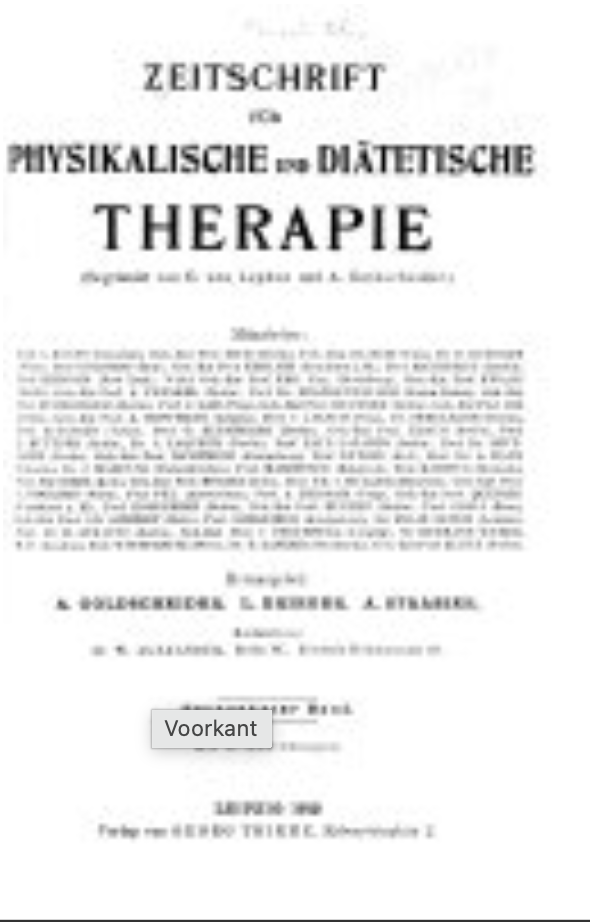
Roemheld’s Original Publication
Summary
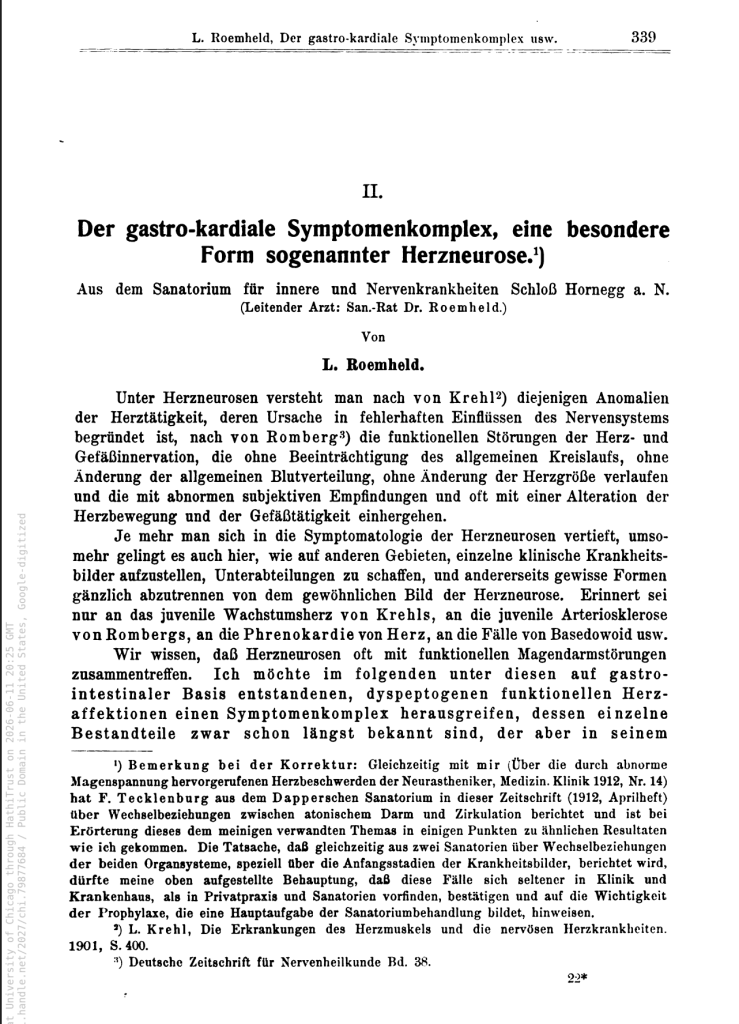
In 1912, German physician Ludwig von Roemheld published what is believed to be the first description of the condition that would later become known as Síndrome de Roemheld o Síndrome Gastrocardíaco.
In his paper, El complejo de síntomas gastro-cardíacos, una forma particular de la llamada neurosis cardíaca (“The Gastro-Cardiac Symptom Complex, a Special Form of So-Called Cardiac Neurosis”), Roemheld described a group of patients who experienced heart-related symptoms that appeared to originate from disturbances within the digestive system.
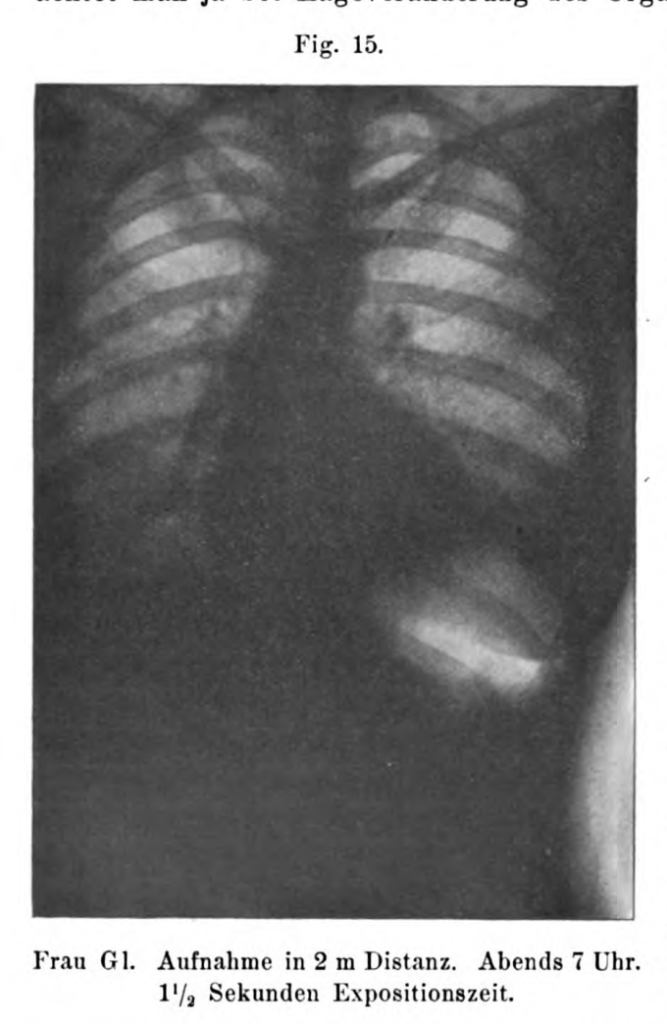
Unlike many modern theories that focus on the vagus nerve or autonomic nervous system, Roemheld’s original explanation was primarily mechanical. He believed that excessive gas accumulation beneath the left diaphragm could elevate the diaphragm, alter the position of the heart, and contribute to symptoms such as palpitations, extrasystoles, chest discomfort, dizziness, and episodes of rapid heartbeat.
The paper also discusses associated factors including obesity, poor breathing mechanics, gastric distension, constipation, aerophagia, and digestive disorders. Roemheld emphasized that these patients were often incorrectly dismissed as suffering from nervous or psychological complaints, despite the presence of a genuine physical condition.
A Remarkable Observation More Than 100 Years Ago
What makes this paper particularly fascinating is how closely Roemheld’s observations resemble reports from modern patients more than a century later.
Among the symptoms and triggers he described were:
- Palpitations occurring after meals
- Extrasystoles (premature heartbeats)
- Symptoms triggered by lying down after eating
- Relief of symptoms after belching
- Improvement during walking and physical activity
- Advice to avoid lying down after meals and instead remain upright or semi-seated
These observations, recorded in 1912, are still frequently reported by patients today and continue to appear in modern discussions of Roemheld Syndrome.
Why This Paper Matters
Although medical understanding has evolved considerably since 1912, Roemheld’s paper remains historically important because it established the concept that disturbances of the digestive system may sometimes produce symptoms that appear cardiac in origin.
More than a century later, researchers continue to investigate the complex relationship between the stomach, diaphragm, autonomic nervous system, and heart. While many questions remain unanswered, Roemheld’s original observations continue to influence discussions about the possible connection between gastrointestinal and cardiovascular symptoms.
A Mechanical Explanation
Unlike many modern theories that focus on autonomic reflexes, inflammation, or vagus nerve stimulation, Roemheld’s original concept appears to have been primarily mechanical.
He proposed that:
Stomach distension → Elevation of the diaphragm → Effects on the heart → Cardiac symptoms
In other words, excessive gas and abdominal pressure could physically alter the position of structures within the chest and contribute to symptoms that patients perceived as heart-related.
This concept was highly controversial at the time and remains debated today.
How the Theory Has Evolved
Roemheld later expanded on his ideas in a 1922 article published in Medizinische Klinik. While his 1912 paper focused primarily on mechanical factors such as gas accumulation and elevation of the diaphragm, he later proposed that the vagus nerve played an important role in connecting the gastrointestinal tract, heart, lungs, and brain.
More than a century later, researchers continue to investigate the relationship between the digestive system and the cardiovascular system.
Modern theories include:
- Hernia de hiato
- Enfermedad por reflujo gastroesofágico (ERGE)
- Gastric distension and bloating
- Vagus nerve stimulation
- Autonomic nervous system dysfunction
- Inflammation and immune activation
While there is still no universally accepted explanation for all cases of Roemheld Syndrome, many of these modern hypotheses can be viewed as extensions of Roemheld’s original observation: that disturbances within the digestive system may sometimes trigger symptoms that appear to originate from the heart.
Why This Matters Today
One of the most striking aspects of Roemheld’s work is that he recognized a pattern still reported by patients more than one hundred years later.
Many individuals describe:
- Palpitations after eating
- Symptoms triggered by bloating
- Relief after belching or passing gas
- Anxiety caused by unexplained cardiac symptoms
- Normal or largely normal cardiac investigations
Whether these experiences represent a single syndrome or multiple overlapping conditions remains a subject of ongoing debate and research.
However, Ludwig von Roemheld’s original observations continue to influence discussions about the complex relationship between the digestive system and the heart.
Did Roemheld Believe His Patients Were Anxious?
Roemheld acknowledged that many patients had a nervous disposition and that emotional factors could influence symptoms. However, he strongly opposed the idea that these patients should simply be told their symptoms were “all nervous.” In this 1912 paper, he argued that physical abnormalities such as gastric distension, elevation of the diaphragm, and abnormal mobility of the heart could be demonstrated clinically and contributed to the symptoms. He therefore viewed the syndrome as a combination of physical and nervous factors rather than a purely psychological disorder.
Interesting observations:
1. Roemheld saw it mostly in affluent people
He writes that these patients were often from the “better classes” of society, tended to exercise too little, ate quickly, and did not take enough time for meals. He even notes that he saw the condition particularly often in physicians.
That’s fascinating because:
- fast eating
- stress
- sedentary work
are still discussed today as possible aggravating factors.
2. X-ray was central to his diagnosis
Roemheld repeatedly states that the syndrome only became understandable through X-ray examination. He considered fluoroscopy the key diagnostic tool because it allowed physicians to see the elevated diaphragm, gastric air bubble, and altered position of the heart.
In 1912, Roemheld was already using imaging to demonstrate that the symptoms had a physical basis.
3. He thought doctors were missing the diagnosis
Roemheld explicitly says that the condition was frequently overlooked by physicians.
That’s a remarkable statement because patients are still saying exactly the same thing today.
4. He believed swallowing air was important
Aerophagia appears throughout the paper.
He repeatedly links gastric distension to excessive air in the stomach and discusses eating habits and swallowed air as contributing factors.
Modern discussions often focus heavily on reflux and hiatal hernia, whereas Roemheld himself seems to have placed considerable emphasis on gas accumulation.
5. He discussed breathing mechanics
Roemheld spends considerable attention on:
- abdominal breathing
- chest breathing
- reduced diaphragmatic movement
- age-related stiffening of the chest wall
and how these may interact with gastric distension.
This is a topic that is often completely omitted from modern summaries.
6. He believed inactivity worsened the condition
He repeatedly advocates:
- walking
- movement
- exercise
- breathing exercises
rather than bed rest.
This is especially interesting because many patients instinctively stop exercising when they experience palpitations.
7. He described a vicious cycle
Not merely:
stomach → heart
but:
digestive problems → palpitations → fear → increased symptom awareness → worsening quality of life
He recognized this over a century ago.
Historical Note about Ludwig von Roemheld
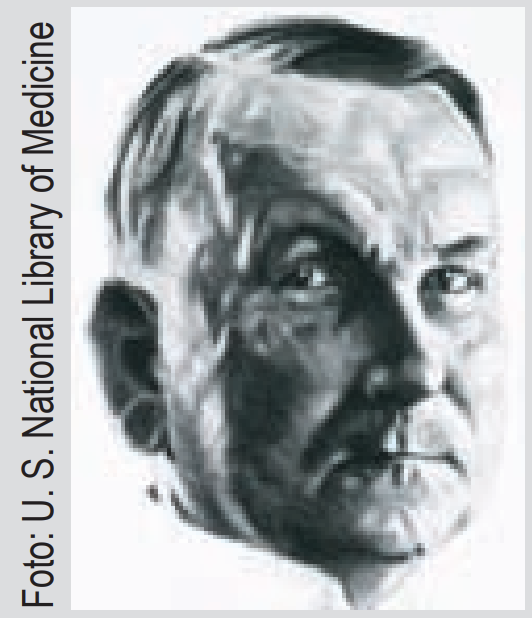
Call to readers: while we have a digital copy of the article, the editorial team is still looking for a hard copy of the original publication. If you can help us, please reach out.
- Ludwig Roemheld was born in 1871 in Groß-Gerau, Germany.
- He studied medicine in Heidelberg and Strasbourg.
- He became medical director of the Horneck Sanatorium in Gundelsheim in 1899.
- He transformed it into one of Germany’s most famous dietary and health resorts.
- He treated royalty, aristocrats, actors and other prominent figures.
- He died in 1938 at age 66 following a stroke (“Herzschlag” in the older German usage).
- Read his short biography.
References
Roemheld L. Der gastro-kardiale Symptomenkomplex, eine besondere Form sog. Herzneurose. Zeitschrift für physikalische und diätetische Therapie. 1912;16:339–349.