
In January 2026, the following Article was published: Gastrointestinal diseases-induced cardiovascular dysfunction: Focus on clinical presentation, pathogenesis and therapeutic implications of gastrocardiac syndrome
Gastrointestinal diseases-induced cardiovascular dysfunction: Focus on clinical presentation, pathogenesis and therapeutic implications of gastrocardiac syndromeBiomedicine & Pharmacotherapy Magazine Volume 194, January 2026, 118808Authors: Wen-Qian Duan, Miao-Miao Guo, Meng-Die Du, Jian Zhang, Shi-Yun Shao, Wen-Shang Fu, Yong-Shun Sun
https://doi.org/10.1007/s00059-024-05249-y
Researchers published a major review examining the relationship between digestive disorders and heart-related symptoms, a phenomenon often referred to as Síndrome Gastrocardíaco o Síndrome de Roemheld. The authors reviewed decades of medical literature and concluded that gastrointestinal problems can sometimes contribute to cardiac symptoms and may even worsen existing heart conditions.
What is Gastrocardiac Syndrome?
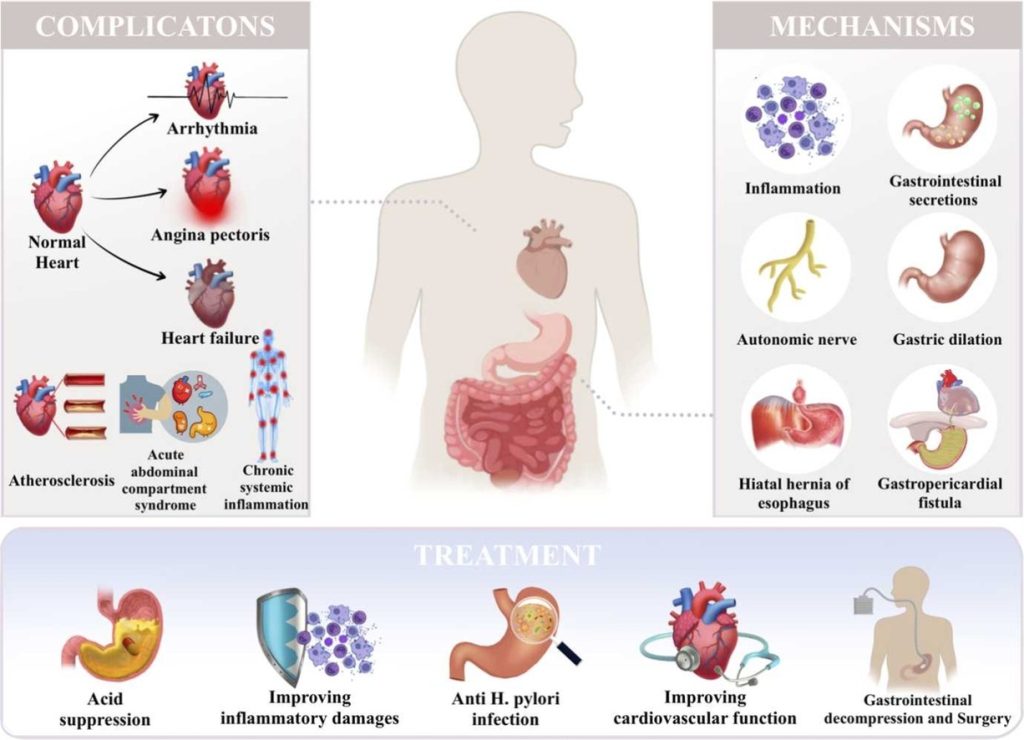
The review describes Gastrocardiac Syndrome as a condition in which problems originating in the digestive system may trigger symptoms that appear to come from the heart. These can include:
- Palpitaciones
- Irregular heart rhythms (arrhythmias)
- Chest discomfort
- Shortness of breath
- Episodes resembling angina (heart-related chest pain)
The concept was first described by German physician Ludwig von Roemheld more than a century ago, but remains poorly understood and under-researched today.
How Could the Gut Affect the Heart?
The authors discuss several possible mechanisms:
1. Stomach Distension
When the stomach becomes excessively full or bloated, it may influence nearby structures and affect nerve signaling between the digestive system and the heart.
2. The Autonomic Nervous System
The gut and heart are connected through a complex network of nerves, including the vagus nerve. Changes in digestive activity may influence heart rhythm through these pathways.
3. Inflammation
Certain digestive disorders can cause chronic inflammation. Researchers suggest that inflammatory processes may contribute to cardiovascular symptoms and increase overall cardiovascular risk.
Which Digestive Conditions Have Been Linked?
The review discusses a number of gastrointestinal conditions that have been associated with cardiac symptoms, including:
- Enfermedad por reflujo gastroesofágico (ERGE)
- Hernia de hiato
- Irritable bowel syndrome (IBS)
- Inflammatory bowel disease (IBD)
- Gastrointestinal infections
- Excessive gas and bloating
Not everyone with these conditions develops cardiac symptoms, but they appear repeatedly throughout the medical literature.
Which Heart Problems Have Been Reported?
The authors found reports linking gastrointestinal disorders with:
- Atrial fibrillation (AF)
- Premature ventricular contractions (PVCs)
- Ventricular arrhythmias
- Symptomatic bradycardia (slow heart rate)
- Angina-like chest pain
- Heart failure symptoms in some cases
Importantly, these reports do no prove that digestive problems directly cause heart disease. They do suggest that digestive disorders may sometimes trigger or worsen symptoms in susceptible individuals.
Why Is This Important?
One of the most interesting observations in the review is that many patients with chest pain ultimately turn out to have a gastrointestinal cause rather than a primary heart problem. The authors cite evidence suggesting that up to one-quarter of patients admitted with acute chest pain may have an underlying gastric condition.
This does no mean chest pain should be ignored. Serious cardiac causes must always be ruled out first.
Wen-Qian Duan, Miao-Miao Guo, Meng-Die Du, Jian Zhang, Shi-Yun Shao, Wen-Shang Fu, Yong-Shun SunWhat Treatments Are Available?
There is currently no single treatment for Gastrocardiac Syndrome. Treatment depends on the underlying digestive disorder and may include:
- Managing reflux disease
- Treating hiatal hernia
- Reducing bloating and excess gas
- Addressing infections or inflammation
- Lifestyle and dietary changes
The authors emphasize that better research is urgently needed and suggest that a future specialty called “Gastro-Cardiology” may help bridge the gap between digestive and heart medicine.
Key Takeaway
This review does not prove that all palpitations, PVCs, or chest discomfort originate in the digestive system. However, it adds to a growing body of evidence suggesting that the gut and heart are more closely connected than traditionally believed. For patients whose symptoms consistently occur after meals, during bloating, or alongside digestive complaints, the digestive system may deserve closer attention as part of the overall evaluation.
Nota del editor
We believe the establishment of Gastro-Cardiology as a formal subspecialty is not merely desirable, but increasingly necessary.
At Roemheld Syndrome International, we strongly support further scientific investigation into the relationship between the gastrointestinal and cardiovascular systems. While Gastrocardiac Syndrome (Roemheld Syndrome) is not currently recognised as a formal diagnosis in most medical guidelines, the growing body of literature suggests that digestive disorders may influence cardiac symptoms in certain patients.
We are particularly encouraged by these calls from researchers for closer collaboration between gastroenterology and cardiology. The emerging concept of Gastro-Cardiology reflects the reality that many patients present with symptoms that do not fit neatly within a single medical specialty.
Our foundation believes that greater cooperation between these disciplines could lead to improved diagnosis, better patient outcomes, and a deeper understanding of the gut–heart connection. We welcome and support efforts to establish Gastro-Cardiology as a recognised subspecialty, and we hope future research will provide the evidence needed to advance this field.
Until then, our mission remains simple: to collect, evaluate, and share the available scientific evidence while amplifying the voices of patients whose experiences deserve further investigation.