
On 11 April 2023, The following article was published in Cureus in has not yet been peer-reviewed or published in a medical journal.
Noom MJ, Dunham A, DuCoin CG. Resolution of Roemheld Syndrome After Hiatal Hernia Repair and LINX Placement: Case Review. Cureus. 2023;15(4):e37429.
Read the full article: https://www.cureus.com/articles/139259-resolution-of-roemheld-syndrome-after-hiatal-hernia-repair-and-linx-placement-case-review#!/
Summary
In this 2023 case report, surgeons from the University of South Florida describe a 60-year-old man who experienced gastroesophageal reflux disease (GERD), hiatal hernia, palpitations, tachycardia, premature ventricular contractions (PVCs), and episodes of hypertensive urgency for approximately five years.
The patient had no significant cardiac history prior to the onset of his gastrointestinal symptoms. Extensive cardiac investigations, including CT angiography and exercise stress testing, failed to identify a clear cardiac cause for his arrhythmias. Testing demonstrated supraventricular tachycardia with intermittent PVCs.
Further gastrointestinal evaluation revealed a hiatal hernia, reflux disease, and a weak lower esophageal sphincter. A 96-hour Bravo pH study confirmed abnormal acid exposure consistent with GERD.
One particularly notable event occurred when food became temporarily lodged in the patient’s esophagus. This was followed by abdominal distension and tachycardia. The tachycardia resolved after the patient cleared the obstruction using a Valsalva maneuver and belching.
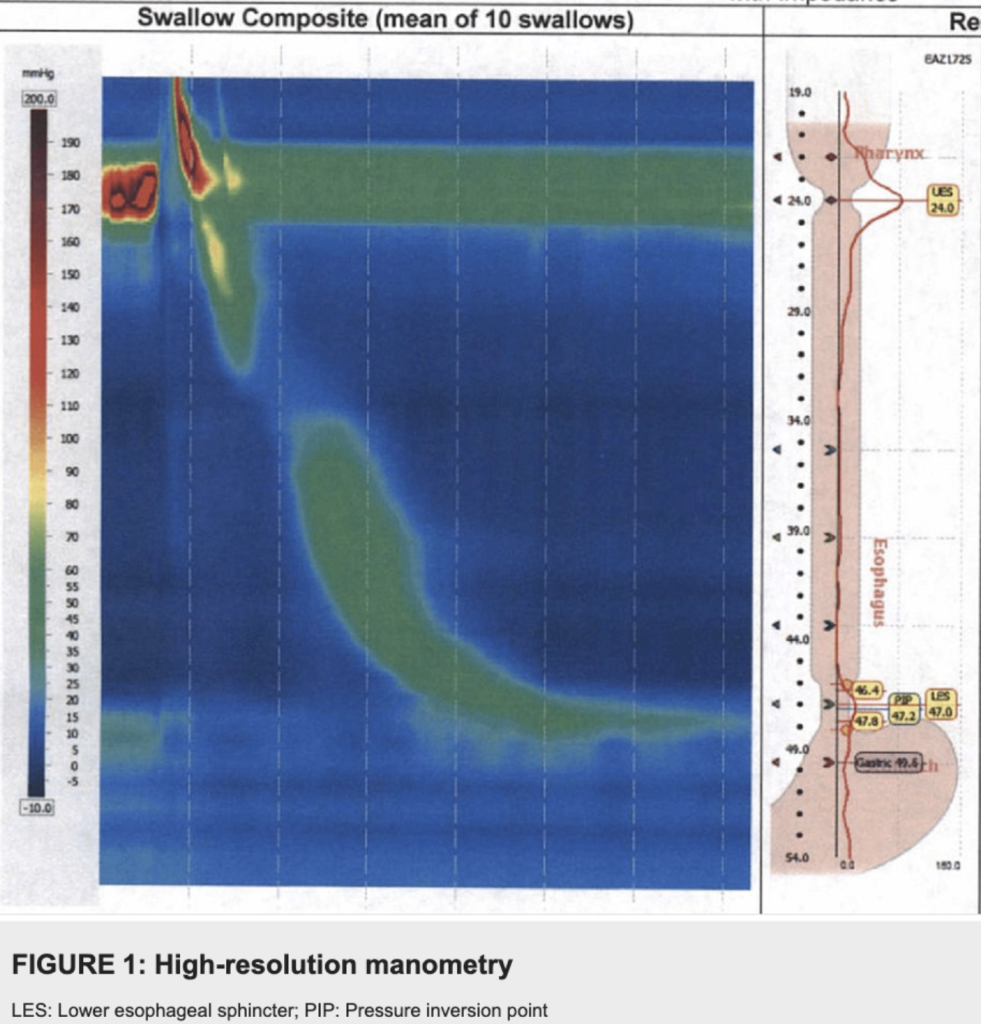
Initially, increasing the patient’s dose of omeprazole significantly improved both his reflux symptoms and his arrhythmias. To achieve complete symptom control and eliminate the need for long-term medication, surgeons proceeded with robotic hiatal hernia repair and LINX magnetic sphincter augmentation.
Four months after surgery, the patient reported complete resolution of both GERD symptoms and cardiac palpitations. He was able to discontinue proton pump inhibitors and cardiac rate-control medications. At ten months follow-up, he remained symptom-free and had experienced no further episodes of hypertensive urgency.
Why This Case Is Important
This report is noteworthy because it documents the resolution of both gastrointestinal and cardiac symptoms following treatment of an underlying hiatal hernia and reflux disease.
Although a single case report cannot prove cause and effect, the authors argue that the close relationship between the patient’s digestive symptoms and arrhythmias suggests a possible gastro-cardiac mechanism.
The case also highlights the potential role of hiatal hernia as an important contributing factor. The authors suggest that protrusion of the stomach into the chest cavity may increase reflux, alter local anatomy, and potentially influence the vagus nerve or nearby cardiac structures.
Proposed Mechanisms
The authors discuss several possible explanations for the patient’s symptoms:
- Vagus nerve stimulation caused by reflux or hiatal hernia.
- Local inflammation around the esophagus and left atrium.
- Release of inflammatory mediators such as IL-1β, IL-6, and C-reactive protein.
- Mechanical effects of a herniated stomach within the chest cavity.
The authors emphasize that the exact mechanism remains unknown and that Roemheld Syndrome continues to be poorly understood.
Editor’s Note
This case report is particularly interesting because it contains a real-time observation of a possible gastro-cardiac interaction.
During one episode, food became lodged in the patient’s esophagus, causing abdominal distension and tachycardia. The tachycardia resolved after the obstruction was relieved and the patient was able to burp. While this observation does not prove causation, it demonstrates a clear temporal relationship between gastrointestinal events and cardiac symptoms.
The report is also notable because the patient’s symptoms improved twice: first with acid-suppressing medication and later with surgical correction of the hiatal hernia and reflux. Following surgery, both his gastrointestinal symptoms and arrhythmias disappeared and remained absent at ten months follow-up.
As with all case reports, caution is required when drawing conclusions from a single patient. Nevertheless, this publication provides another modern example of a patient whose cardiac symptoms appeared closely linked to an underlying gastrointestinal disorder.