
In 2015, the following landmark review article was published in Circulation Research, one of the world’s leading cardiovascular journals.
Grassi G, Mark A, Esler M.
The Sympathetic Nervous System Alterations in Human Hypertension.
Circulation Research. 2015;116(6):976–990.
https://www.ahajournals.org/doi/10.1161/CIRCRESAHA.116.303604
Why This Paper Matters
Published in the prestigious journal Circulation Research, this review article is considered an important overview of how the autonomic nervous system influences cardiovascular health.
The paper was written by three internationally recognized experts in the field: Guido Grassi, Allyn Mark, and Murray Esler. Professor Esler is widely regarded as one of the pioneers of modern autonomic cardiovascular research, while Professors Grassi and Mark have made major contributions to our understanding of sympathetic nervous system activity and cardiovascular disease.
Rather than presenting a single new study, the authors review decades of scientific evidence and summarize what is currently known about the role of the sympathetic nervous system in human disease.
What Is the Sympathetic Nervous System?
The sympathetic nervous system is often referred to as the body’s “fight-or-flight” system.
When activated, it releases stress hormones such as adrenaline and noradrenaline, increasing heart rate, blood pressure, and alertness. This response is essential in dangerous situations, but problems may arise when the system remains overactive for prolonged periods.
The authors argue that excessive sympathetic activation is not simply a consequence of disease—it may actively contribute to the development of cardiovascular problems.
More Than Just High Blood Pressure
Although the paper focuses on hypertension, the authors emphasize that sympathetic overactivity affects far more than blood pressure alone.
Research suggests that excessive sympathetic activity may contribute to:
- Cardiac arrhythmias
- Heart failure
- Enlargement of the heart muscle (left ventricular hypertrophy)
- Obesity and metabolic syndrome
- Sleep apnea
- Kidney disease
- Increased cardiovascular risk
According to the authors, the sympathetic nervous system plays an important role in many of the body’s cardiovascular processes.
The Connection to Heart Rhythm Disorders
One of the most interesting aspects of the review is its discussion of cardiac arrhythmias.
The authors state that sympathetic nervous system activity is involved in the development of potentially serious heart rhythm disturbances and sudden cardiac death.
In simple terms, increased sympathetic activity can make heart cells more electrically excitable. In susceptible individuals, this may increase the likelihood of abnormal heart rhythms occurring.
This does not mean that every arrhythmia is caused by stress or adrenaline, but it does highlight the important role that autonomic regulation can play in heart rhythm disorders.
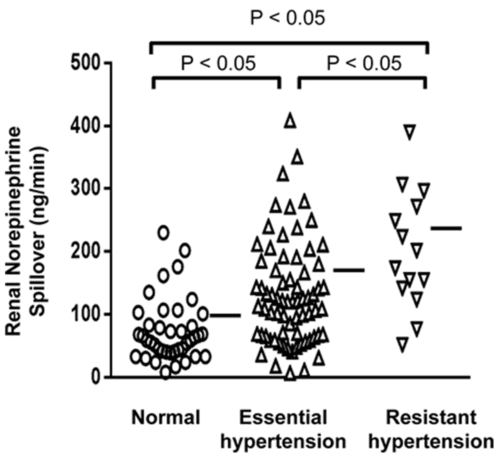
A Complex System
The review also explains that autonomic regulation is highly complex.
The sympathetic nervous system does not affect every organ in the same way. Different organs can experience different levels of sympathetic activity at the same time.
This helps explain why patients with similar medical conditions may experience very different symptoms and why some cardiovascular symptoms remain difficult to understand.
Lifestyle Factors
The authors discuss several factors that may influence sympathetic nervous system activity, including:
- Obesity
- Physical inactivity
- Chronic stress
- Sleep disorders
They also review evidence suggesting that interventions such as exercise training, weight loss, and improved cardiovascular health may help reduce excessive sympathetic activation.
Editor’s Note
This review does not discuss Roemheld Syndrome, hiatal hernia, reflux, bloating, or meal-related palpitations. It therefore should not be interpreted as evidence that gastrointestinal disorders directly cause PVCs, PACs, or other arrhythmias.
Nevertheless, the paper is highly relevant because it provides a scientific framework for understanding how the autonomic nervous system influences cardiovascular symptoms and heart rhythm disturbances.
The authors—among the world’s leading experts in autonomic cardiovascular research—conclude that excessive sympathetic nervous system activity plays an important role in arrhythmias, heart failure, hypertension, and other cardiovascular conditions. They also emphasize that autonomic regulation is highly complex and that different organs may be affected in different ways.
For readers of Roemheld.org, this is an important reminder that the heart does not function in isolation. Signals arising from elsewhere in the body can influence autonomic balance and potentially affect cardiovascular symptoms.
While the exact mechanisms behind gastro-cardiac interactions remain poorly understood and require much more research, this review strengthens the broader scientific understanding that disturbances of the autonomic nervous system can have meaningful effects on heart rhythm and symptom perception.
In short, this paper does not prove Roemheld Syndrome—but it does support the idea that autonomic pathways deserve serious consideration when investigating unexplained cardiovascular symptoms.