
In 2024, the following article was published in the Journal of Education, Health and Sport
Bijata, B.; Burek, D.; Paszkowska, A.; Kujawa, A.; Matuszewska, U.; Nykowska, A.; Beutler, K. Romheld’s Gastrocardiac Syndrome, Diagnosing a Complex of Cardiologic and Gastroenterologic Symptoms. J Educ Health Sport 2024, 53, 11-20.https://apcz.umk.pl/JEHS/article/view/47785
Summary
This 2024 case report describes a 65-year-old man who presented with recurrent palpitations, episodic arrhythmias, and symptoms suggestive of gastroesophageal reflux disease (GERD).
The patient had no known history of cardiovascular disease, hypertension, diabetes, or smoking. He reported episodes of palpitations, burning discomfort behind the lower sternum, and symptoms that were aggravated by heavy meals, coffee, alcohol, bending over, and stressful situations. The symptoms were particularly noticeable after evening meals and when lying down shortly afterwards.
Extensive medical evaluation was performed to identify a possible cardiac cause. Blood tests, including glucose, lipid profile, electrolytes, and thyroid function tests, were normal. Electrocardiography initially demonstrated normal sinus rhythm, while echocardiography revealed no structural abnormalities, valvular disease, or impairment of cardiac function.
Following the exclusion of an obvious cardiac cause, physicians suspected gastroesophageal reflux disease and recommended lifestyle modifications, including avoidance of trigger foods, proton pump inhibitor therapy, and sleeping with the head elevated. These measures resulted in significant improvement of both gastrointestinal and cardiac symptoms.
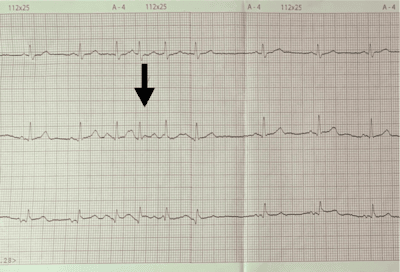
Several months later, the patient reintroduced small amounts of coffee into his diet and experienced a recurrence of symptoms. During further evaluation, physicians documented a particularly unusual finding. The patient reported that swallowing appeared to trigger episodes of arrhythmia. During provoked swallowing, electrocardiography recorded premature supraventricular beats occurring in brief salvos.
On the same day, the patient also experienced a short episode of atrial fibrillation. Repeat blood tests and echocardiography remained normal, and sinus rhythm returned spontaneously.
The patient was treated with low-dose metoprolol and advised to continue lifestyle measures aimed at reducing reflux symptoms, including avoiding heavy evening meals, alcohol, and coffee. Following adherence to these recommendations, both gastrointestinal symptoms and cardiac arrhythmias resolved, and no further episodes of atrial fibrillation were reported during follow-up.
Why This Case Is Important
This case report highlights the close temporal relationship between gastrointestinal symptoms and cardiac rhythm disturbances.
Unlike many reports that focus primarily on reflux disease or hiatal hernia, this case is notable because physicians documented premature supraventricular beats occurring during provoked swallowing. This observation raises the possibility that activity within the esophagus may directly influence cardiac rhythm in susceptible individuals.
The report also demonstrates that gastrointestinal and cardiac symptoms improved together following treatment directed primarily at reflux disease and lifestyle modification.
Proposed Mechanisms
The authors discuss several mechanisms that may contribute to gastrocardiac symptoms, including:
- Gastroesophageal reflux disease (GERD)
- Esophageal inflammation
- Increased abdominal pressure
- Gastric and esophageal distension
- Increased vagal nerve activity
- The close anatomical relationship between the esophagus and the left atrium
The authors emphasize that gastrocardiac syndrome remains a diagnosis of exclusion and should only be considered after structural heart disease and other common causes of arrhythmia have been ruled out.
Editor’s Note
This report is particularly interesting because of the swallowing-induced arrhythmias documented during evaluation.
Many patients with suspected Roemheld Syndrome report palpitations after eating, bloating, or reflux symptoms. In this case, however, the physicians were able to record premature supraventricular beats on ECG while the patient deliberately provoked symptoms through swallowing.
While this observation does not prove a direct causal relationship, it provides a rare example of a possible real-time interaction between esophageal activity and cardiac rhythm.
The report also illustrates a recurring theme seen in many modern Roemheld Syndrome case reports: normal cardiac investigations, a clear association between gastrointestinal and cardiac symptoms, and improvement following treatment of the underlying digestive disorder.
As with all case reports, conclusions must be drawn cautiously. Nevertheless, this publication contributes another piece of evidence supporting the possibility that disturbances within the gastrointestinal tract may influence cardiac rhythm in certain individuals.