
The following article (pre-print) from 11 February 2026 has not yet been peer-reviewed or published in a medical journal.
Guidewire-Assisted 3D Mapping of Intramural Ventricular Arrhythmia Associated with Roemheld Syndrome: A Novel Case Report
Authors: Kunaraj Perumalu, Colin Yeo, Eric Tien Siang Lim
Pre-print (at time of writing)
Reade the full article: https://doi.org/10.21203/rs.3.rs-8752849/v1
Case report: deep-seated PVCs in a patient with suspected Roemheld Syndrome
A case report published in 2026 describes a 45-year-old woman who experienced frequent palpitations that appeared to be triggered by episodes of abdominal pain. Testing showed that nearly one in four of her heartbeats were PVCs (premature ventricular contractions), despite her heart appearing structurally normal on echocardiography and cardiac MRI. Medication provided little relief.
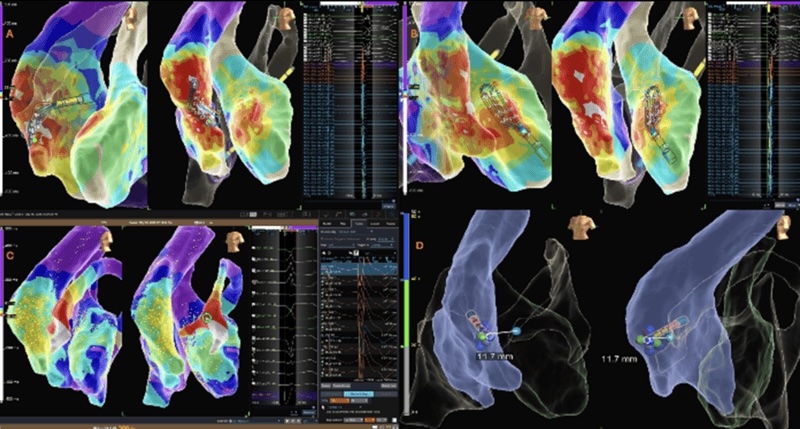
Doctors performed an advanced electrophysiology study to identify the source of the PVCs. They discovered that the abnormal electrical activity originated from deep within the wall of the heart, making it difficult to locate and treat using conventional techniques. After detailed 3D mapping, the medical team successfully performed a catheter ablation procedure, eliminating the PVCs. At the end of the procedure, the abnormal rhythm could no longer be induced.
The authors discuss Roemheld Syndrome as a possible explanation for the connection between the patient’s abdominal symptoms and heart rhythm disturbances. They suggest that pressure or irritation within the digestive system may influence the heart through the autonomic nervous system, particularly the vagus nerve.
The report also highlights the importance of looking beyond the heart alone. In some patients, gastrointestinal symptoms and cardiac symptoms may occur together, and understanding both may be necessary to fully understand the patient’s condition.
Kunaraj Perumalu, Colin Yeo, Eric Tien Siang LimWhy this study matters
This case adds to the growing body of literature exploring the connection between the digestive system and heart rhythm disturbances. It also demonstrates that some PVCs may originate from deep within the heart muscle and require specialised mapping techniques for successful treatment.
Editor’s Note
This report is interesting because it specifically mentions Roemheld Syndrome and describes a patient whose palpitations appeared to be linked to abdominal symptoms. However, unlike some other case reports, the authors did not directly prove that the gastrointestinal symptoms caused the PVCs. The connection remains a proposed explanation rather than a confirmed cause-and-effect relationship.
Nevertheless, every new publication helps build a broader understanding of the gut-heart connection and highlights the need for further research into this often-overlooked area of medicine.